
The first hours after a car accident shape much of what follows – the evidence that gets captured, the deadlines that start running, and how strong your claim ends up being. What comes next, though, depends heavily on where in Canada the crash happened. Auto insurance is regulated province by province, so the rules on fault, the benefits you can claim, and whether you can sue the other driver all vary from one jurisdiction to the next.
This guide explains what to do immediately after a crash anywhere in Canada, how the different provincial systems decide fault and pay benefits, and when you’re entitled to sue directly – so you’re not learning it for the first time while also dealing with an injury.
Ready to talk to someone? When you’re ready to speak to someone, you can find a car accident lawyer in your city through the directory links throughout this page.

What to Do Immediately After a Crash – Anywhere in Canada
These first steps apply across the country, regardless of which province’s insurance system covers you:
- Check for injuries and call 911 if anyone is hurt or if vehicles are dangerously blocking traffic. Move to safety if you can.
- Exchange information with every other driver involved – name, contact details, licence plate, and insurance policy number – regardless of how minor the damage looks.
- Know when police involvement is required. Every province sets a dollar threshold above which a collision must be reported, and requires a report whenever there’s an injury, a pedestrian or cyclist is involved, or a criminal offence such as impaired driving is suspected. The property-damage threshold and reporting method differ by province – many use dedicated Collision Reporting Centres – so confirm the specific requirement with local police and your insurer. Even when a police report isn’t legally required, your own policy almost certainly still requires you to report the accident.
- Take photos of all vehicles, the road, skid marks, traffic signals, and visible injuries, and get contact information for any witnesses.
- Get medical attention even if you feel okay. Some injuries – especially soft tissue and concussion symptoms – don’t show up right away, and an early medical record connects your injuries to the accident.
- Notify your own auto insurer promptly. Most provinces impose a short window (often around seven days) to signal your intention to claim benefits, followed by a deadline to submit a completed application form. These timelines are strict and run regardless of who caused the crash.

Common Types of Car Accident Injuries
The type of injury involved shapes both the medical evidence a claim requires and its likely value. Car accident lawyers across Canada regularly see:
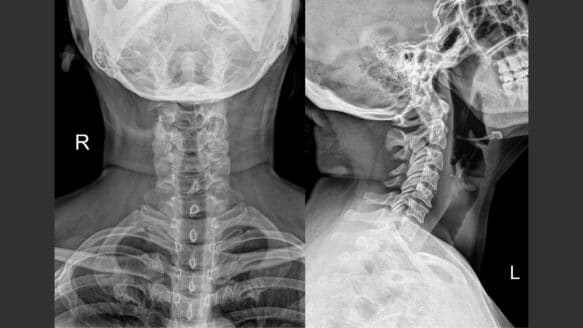
- Whiplash and soft tissue injuries – the most common car accident injury, especially from rear-end collisions, and notoriously difficult to prove through imaging alone.
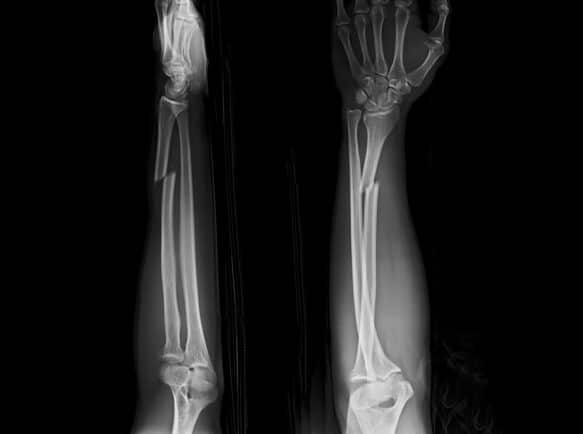
- Fractures – from minor breaks to complex injuries requiring surgical repair, common in higher-speed highway collisions.
- Concussion and traumatic brain injury – symptoms that can take days to present fully, sometimes missed entirely in an initial ER visit focused on more visible injuries.
- Spinal cord injury – among the most serious outcomes of a car accident, occasionally resulting in partial or complete paralysis.
- Psychological injury – PTSD and driving-related anxiety are common after a serious collision and are recognized across Canadian jurisdictions as compensable in their own right.
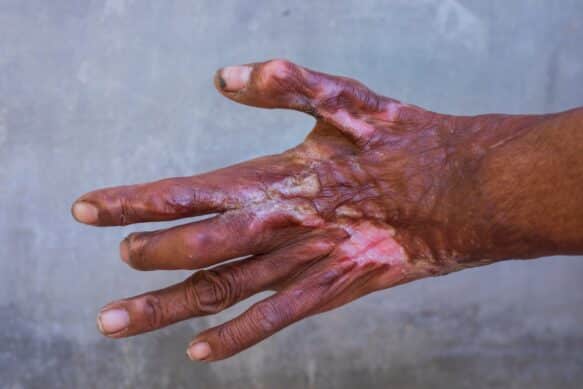
- Permanent scarring – treated as a distinct head of damage separate from the underlying physical injury.
The most severe injuries in several of these categories can trigger enhanced, or “catastrophic,” benefit levels in provinces that use that designation, which substantially raises the benefits available. If your injuries extend beyond a car accident, our personal injury directory covers the broader range of claims.
How Fault Is Determined After a Car Accident in Canada
There is no single national rule for fault – how it’s decided depends on your province’s insurance model. Broadly, Canada has three approaches:
Tort (at-fault)
Such as those in Atlantic Canada and, for pain-and-suffering claims, most of Ontario and the Prairies – let an injured person sue the at-fault driver for damages, with fault decided on the evidence.
Hybrid no-fault
Such as Ontario, where your own insurer pays accident benefits regardless of fault, but you can still sue the at-fault driver if your injury meets a legal threshold.
Pure / public no-fault
Such as British Columbia (under ICBC’s Enhanced Care), Manitoba, Saskatchewan, and Quebec – where a public insurer pays defined benefits and the right to sue for most injuries is sharply limited or removed.
Several provinces also use standardized fault charts – Ontario’s Fault Determination Rules (O. Reg. 668) are a well-known example – that assign responsibility in fixed increments (0%, 25%, 50%, 75%, or 100%) based on how the vehicles were positioned and moving, not on weather or who seemed more careless.
Common fault scenarios across Canada
| Scenario | Generally at fault | Why |
|---|---|---|
| Rear-end collision | The following driver – generally 100% | Drivers are expected to keep a safe following distance, even if the car ahead brakes suddenly. |
| Left turn across oncoming traffic | The turning driver | Applies when the driver turns into the path of an oncoming vehicle going straight. |
| Lane change | The driver changing lanes | Applies when they collide with a vehicle already in that lane. |
| Both vehicles backing out of parking spots | Typically split 50/50 | Both drivers share responsibility. |
Good to know: Two things surprise many people: fault for insurance purposes is usually applied independently of any traffic tickets or charges, and it primarily sorts responsibility between insurers rather than deciding a lawsuit conclusively. If you disagree with how fault was assigned, you can dispute it, and in a tort claim your lawyer can present evidence – witness statements, dash-cam footage, accident reconstruction – that a court may weigh differently. Where you were partly at fault, most provinces’ contributory negligence rules reduce your compensation by your share of fault rather than eliminating the claim.
What Accident Benefits Cover
In most provinces, your own auto insurer provides a set of no-fault benefits after a crash, regardless of who caused it. The names differ – Statutory Accident Benefits in Ontario, Enhanced Care in B.C., Personal Injury Protection on the Prairies – but the core categories are broadly similar:
- Medical benefits – treatment costs such as physiotherapy and prescriptions related to your injuries.
- Rehabilitation benefits – services supporting your recovery and return to daily function.
- Attendant care benefits – support with personal care if your injuries require it.
- Income replacement – partial replacement of lost earnings while you’re unable to work.
What varies most is how generous these benefits are, which of them are mandatory versus optional, and the dollar limits attached. Ontario, for instance, has moved several benefit types to optional endorsements that must be purchased separately, so two drivers can carry very different coverage. Public-insurer provinces like B.C., Manitoba, Saskatchewan, and Quebec tend to provide broader defined benefits but limit or remove the right to sue. Confirming exactly what your own policy covers – and which province’s rules apply to your crash – is a useful early step after any collision.
When You Can Sue the At-Fault Driver
No-fault benefits are paid by your own insurer regardless of fault, but they’re capped and generally don’t include full compensation for pain and suffering. Whether you can recover those additional damages depends on your province. In tort and hybrid provinces, you can bring a separate claim directly against the at-fault driver – though provinces like Ontario require your injury to meet a legal threshold (for example, a “permanent serious impairment of an important physical, mental, or psychological function”) before pain-and-suffering damages are available. In pure no-fault provinces, the public benefit scheme largely replaces that right to sue. This tort process is the same one that applies to personal injury claims more broadly – a car accident is simply the most common way people end up navigating it.
Where both processes are available, most injured people pursue them at the same time, since they rely on overlapping medical evidence, and a car accident lawyer can manage them together rather than as two disconnected files.
Catastrophic Impairment: Why This Designation Matters
In several provinces, “catastrophic impairment” is a specific legal classification, not a general description of a severe injury. Where it exists, regulations define qualifying conditions. They can include paraplegia or quadriplegia meeting specific neurological criteria, amputation, total vision loss, a qualifying traumatic brain injury, a combination of physical impairments producing a high whole-person impairment percentage, or a serious mental or behavioural disorder causing marked impairment across multiple areas of functioning. Meeting a single category is typically enough.
Why it matters: The designation matters because it can dramatically raise benefit limits – in Ontario, for example, up to roughly $1,000,000 combined for medical, rehabilitation, and attendant care, compared to far lower limits for a non-catastrophic injury.
Getting there usually requires a formal application supported by a treating physician or psychologist, and insurers frequently arrange their own medical examination that can reach a different conclusion. Disputes over catastrophic designation are common and often end up before a provincial tribunal, which is one reason people hire a car accident lawyer experienced with this process rather than handling it alone.

Multi-Vehicle and Commercial Vehicle Collisions
Highway pile-ups and collisions involving delivery vans, transport trucks, or other commercial vehicles add real complexity to any car accident claim. These crashes often involve several insurers at once – each driver’s personal policy plus, where a commercial vehicle is involved, a separate fleet or commercial insurer with its own adjuster, higher policy limits, and its own legal team. Sorting out fault among three or more vehicles frequently requires accident reconstruction evidence rather than a straightforward application of any standardized fault chart, since those scenarios assume a simpler two-vehicle collision.
Commercial vehicle claims can also involve evidence not present in an ordinary collision – driver logs, vehicle maintenance records, and dispatch records – since the trucking company itself may share responsibility alongside the driver. Busy highway corridors, like the stretch covered in our Hamilton car accident guide, see a lot of these claims. Given the number of parties and higher stakes typically involved, these are exactly the situations where early legal involvement tends to matter most.
Pedestrian and Cyclist Accidents
Pedestrians and cyclists struck by a vehicle are generally entitled to accident benefits through the driver’s insurer in most provinces, even though they weren’t in a vehicle themselves – no-fault coverage typically extends to anyone injured by an automobile, not just its occupants. If the pedestrian or cyclist doesn’t have their own auto policy, they usually claim benefits directly from the at-fault driver’s insurer or, in public-insurer provinces, from the provincial scheme.
These cases often involve more serious injuries, given the lack of any vehicle to protect the person, and fault can be more contested than in a typical two-car collision – particularly around right-of-way at intersections, crosswalk timing, or whether a cyclist was following the rules of the road. Dense urban cores across Canada, combined with high pedestrian and cyclist volumes, make these claims common enough that many car accident lawyers handle them regularly.
How Insurance Adjusters Handle Car Accident Claims
Insurance adjusters work within their employer’s guidelines – even your own insurer’s adjuster is assessing the claim within the company’s framework, not acting as your advocate. Common patterns worth knowing about:
- Early settlement offers, often made before the full extent of your injuries is known, especially for injuries like whiplash or concussion that can take weeks to present fully.
- Requests for a recorded statement shortly after the accident, when you may still be in shock or unsure of exactly what happened – anything you say can be used to characterize your account later.
- Broad medical authorization requests that go further than necessary, giving the insurer access to unrelated medical history.
- Leaning on standardized fault charts in the insurer’s favour without necessarily volunteering that a different allocation might apply given the specific evidence.
None of this means adjusters are acting in bad faith – it means they’re doing their job, which isn’t the same as advocating for you.

How a Car Accident Lawyer Changes the Negotiation
A car accident lawyer’s main value is levelling a negotiation that otherwise happens entirely on the insurer’s terms: gathering independent medical evidence, obtaining expert reports on long-term prognosis and future care costs, and backing the file with a credible willingness to litigate if a fair settlement isn’t offered. Most car accident lawyers in Canada work on contingency – no upfront cost, with a fee that’s a percentage of what’s recovered, agreed to in writing before they take your case – so getting a professional opinion on your claim’s value doesn’t require paying anything out of pocket first.
If Your Injury Keeps You Off Work
The income-loss portion of a car accident claim, whether through no-fault benefits or a tort settlement, is generally a one-time payment tied to the claim itself, not an ongoing income source. If you also have long-term disability (LTD) insurance through an employer benefits plan or a private policy, that’s a separate claim against your disability insurer and can provide ongoing monthly income. In contrast, your car accident claim is still being resolved. If an LTD claim connected to your accident has been denied, delayed, or cut off, this guide to long-term disability claims covers that separate process, including deadlines that run independently of your car accident claim.
Key Car Accident Terms to Know
- No-fault benefits – coverage paid by your own insurer (or a public insurer) after a crash, regardless of who was at fault. Called SABS in Ontario, Enhanced Care in B.C., and PIP on the Prairies.
- Tort claim – a lawsuit against the at-fault driver, seeking damages such as pain and suffering beyond what no-fault benefits cover. Availability varies by province.
- Threshold – in provinces like Ontario, the “permanent serious impairment” standard an injury must meet to unlock a pain-and-suffering claim.
- Fault determination – the system a province uses to assign insurance fault, often through standardized rules independent of any police charges.
- Catastrophic impairment – in provinces that use it, a specific classification that significantly raises available benefit limits for the most severe injuries.
- Application forms (e.g. OCF-1 / OCF-19) – the standard insurer forms used to apply for benefits and, where applicable, for a catastrophic impairment determination. Form names differ by province.
- Independent medical examination (IME) – a medical assessment arranged and paid for by the insurer, which can reach different conclusions than your treating doctors.
- Contributory negligence – the rule that reduces, rather than eliminates, compensation when a claimant shares some fault for the accident.
Canada’s Provincial Insurance Landscape
Because auto insurance is provincial, the body that resolves a dispute depends on where you are. Benefit disputes may go to a specialized tribunal (Ontario’s Licence Appeal Tribunal, for example) or through a public insurer’s internal review in B.C., Manitoba, Saskatchewan, and Quebec; tort claims proceed through the province’s superior court. Insurers are overseen by provincial regulators – such as the Financial Services Regulatory Authority of Ontario (FSRA) – and property-damage-only collisions above the reporting threshold are usually documented through Collision Reporting Centres rather than by an officer attending the scene.
The practical upshot: The province where your crash happened, not where you live, usually governs your claim.
How to Choose the Right Car Accident Lawyer
Car accident claims range from a straightforward, low-speed fender-bender to a catastrophic multi-vehicle highway collision, and lawyers often develop deeper experience with one end of that spectrum than the other. When comparing lawyers, ask about their specific experience with cases like yours, including whether they regularly handle catastrophic impairment disputes or commercial vehicle claims (if that applies), how they communicate as a case develops, and how their contingency fee works. Choosing a lawyer who practises in the right province matters too, since the rules differ so much. Top Lawyers Canada lets you compare vetted lawyers city by city rather than choosing based on an ad alone.
This page is general information, not legal advice – the specifics of your accident, your policy, and your province are worth reviewing directly with a qualified car accident lawyer.
Frequently Asked Questions
What should I do immediately after a car accident in Canada?
Check for injuries and call 911 if anyone is hurt, then exchange information with the other driver – name, contact details, and insurance policy number regardless of how minor the damage looks. Take photos of the vehicles, the road, and any visible injuries, and get contact information for witnesses. Police involvement is only legally required in specific situations (an injury, a suspected criminal offence, or property damage above your province’s threshold). However, you should still notify your insurer promptly and seek medical attention even if you feel fine.
Do the rules change depending on which province the accident happened in?
Yes – significantly. Auto insurance is regulated provincially, so fault, the benefits you can claim, and whether you can sue the at-fault driver all vary. Provinces like B.C., Manitoba, Saskatchewan, and Quebec use public insurers with broad no-fault benefits and limited rights to sue. At the same time, Ontario and much of the rest of the country allow tort claims subject to certain conditions. As a rule, the province where the crash occurred governs the claim. Our city directories – from Toronto to Ottawa – connect you with lawyers who practise under the right provincial rules.
Can I get compensation if I was partially at fault?
Usually yes. Most provinces apply contributory negligence, meaning your compensation is typically reduced by your percentage of fault rather than eliminated. For example, if you’re found 25% at fault, your award is generally reduced by that share rather than denied outright.
What are accident benefits and how do I claim them?
Accident benefits are no-fault benefits paid by your own insurer (or your provincial public insurer) after a crash, regardless of who caused it. Common categories include medical, rehabilitation, attendant care, and income replacement, which are mandatory, and their dollar limits vary by province. You generally claim them by notifying your insurer within a short window after the accident – often around seven days – and submitting the required application form by the province’s deadline.
How long after a car accident can I sue?
In most tort and hybrid provinces, the limitation period for a claim against the at-fault driver is two years, but it can differ by province, and it often runs from the date the claim was or ought to have been discovered rather than the date of the accident. Separate, shorter procedural deadlines apply on the benefits side – missing them can affect your benefits even though they aren’t limitation periods for a lawsuit. Because missing a limitation period generally ends your right to sue, regardless of how strong the claim is, it’s advisable to speak with a lawyer well before it approaches.
Will my insurance rates go up if I hire a lawyer?
No, hiring a lawyer itself doesn’t affect your rates. What can affect them is being found at fault or your overall claims history, which happens independently of whether you have legal representation. A lawyer working on your benefits or a tort claim doesn’t create a new claim against your policy beyond the one already in place from the accident.
What if the other driver was uninsured or unidentified (hit and run)?
You’re still likely covered. Standard auto policies across Canada include some form of uninsured or unidentified motorist protection, and optional endorsements can increase that coverage if you carry them. Where no insurance applies, most provinces maintain a fund of last resort – Ontario’s Motor Vehicle Accident Claims Fund is one example – that may be available.
How does catastrophic impairment affect a car accident claim?
In provinces that use the designation, it can dramatically increase the benefits available – in Ontario, up to roughly $1,000,000 combined for medical, rehabilitation, and attendant care, versus far lower limits for most other injuries. It requires meeting specific medical and functional criteria. Because insurers frequently dispute it based on their own examinations, this is one of the areas where an experienced car accident lawyer tends to matter most.
Should I give a recorded statement to the insurance adjuster?
Be cautious, particularly with the at-fault driver’s insurer. You’re generally expected to cooperate with your own insurer to receive benefits. Still, you’re not obligated to give a detailed recorded statement to another driver’s insurance company – especially soon after the accident, when shock or unclear memory can lead to statements that get used against you later.
What if I was hit by a commercial truck or delivery vehicle?
These claims typically involve more than one insurer – the driver’s personal policy and the company’s commercial fleet policy – plus evidence like driver logs and maintenance records that don’t come up in a typical two-car collision. Commercial insurers often devote more resources to minimizing payouts than a standard personal auto insurer. Highway corridors like the ones covered in our Oakville car accident guide see a lot of these claims, and a lawyer experienced with commercial vehicle collisions can help identify every party that may bear responsibility.
What happens if I’m a pedestrian or cyclist hit by a car?
You’re generally entitled to accident benefits through the driver’s insurer in most provinces, even without a vehicle or policy of your own, since no-fault coverage typically extends to anyone injured by an automobile. Fault can be more contested than in a typical two-car collision, particularly around right-of-way and crosswalk timing.
Do I need a lawyer for a minor fender-bender?
For very minor collisions with no injuries and clear fault, some people handle the property damage claim directly with their insurer. Once an injury is involved, even a seemingly minor one like whiplash, insurers know that unrepresented claimants tend to accept less than a claim is worth. Top Lawyers Canada lists car accident lawyers across the country, and you can get a free consultation to confirm whether your situation is genuinely minor.
What’s the difference between a car accident lawyer and a personal injury lawyer?
A car accident lawyer focuses specifically on the dual-track process of accident benefits and tort claims unique to motor vehicle collisions – fault determination, no-fault benefits, and any injury threshold. A personal injury lawyer handles a broader range of negligence claims, including car accidents alongside slip and falls, medical malpractice, and other injury types. Many lawyers handle both, since the underlying tort principles overlap significantly.
How do I choose a car accident lawyer in my city?
Ask about experience with cases similar to yours – a lawyer who mostly handles minor fender-benders may not be the strongest fit for a catastrophic multi-vehicle collision, and vice versa – and make sure they practise under your province’s rules. Ask how they communicate as a case develops and how their contingency fee works. The Top Lawyers Canada directory lets you compare a few lawyers in your city side by side rather than choosing based on an ad alone.
Can I claim compensation for psychological injuries after a car accident?
Yes. Canadian law recognizes psychological injuries – including PTSD, driving-related anxiety, and depression connected to a car accident – as compensable harm, whether they accompany a physical injury or occur largely on their own. These claims typically require an assessment from a psychologist or psychiatrist, since insurers scrutinize them more closely than visible physical injuries.
What if my car accident injury keeps me off work long-term?
Your car accident claim’s income-loss component is generally a one-time payment as part of a settlement, not ongoing income. If you have long-term disability insurance, that’s a separate claim against your disability insurer that can provide ongoing monthly payments while your car accident claim is resolved. Our long-term disability guide explains how that process works and the deadlines involved.
Does it matter if my accident happened on the highway versus a local road?
The underlying legal framework is the same, but highway collisions tend to involve higher speeds, more severe injuries, and a greater chance of multiple vehicles or commercial trucks – which adds investigative complexity. Our Hamilton car accident guide covers a distinctive highway stretch if you want to see how that plays out. Local road accidents more often involve intersections, turning movements, and pedestrians or cyclists, where standardized fault scenarios tend to apply more directly.