
A motorcycle accident claim in Canada is not just a car accident claim with fewer wheels. The injuries tend to be more severe, assumptions about rider behaviour can affect how claims are handled, and helmet use raises legal questions that never come up in a typical car crash. On top of that, the rules governing motorcycle accident claims differ significantly from province to province – Ontario, British Columbia, Alberta, and Quebec each operate under fundamentally different insurance and compensation frameworks.
This guide explains how motorcycle accident claims work across Canada, what varies by province, and what to expect before you contact one of the motorcycle accident lawyers listed on Top Lawyers Canada.
Important: It is general information, not legal advice.




















Why Motorcycle Accident Claims Work Differently
Riding a motorcycle changes the legal picture in three concrete ways, regardless of which province you are in.
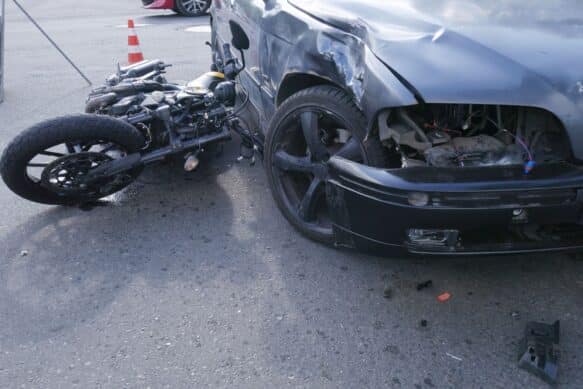
Injury severity is structurally different. A motorcycle has no frame, airbags, or crumple zone between the rider and the point of impact. Collisions that would leave a car’s occupants with minor injuries can leave a rider with fractures, road rash, traumatic brain injury, or worse. Insurers know this, and claim values reflect it, but the medical evidence required to support them does too.
Assumptions about rider behaviour can affect claims. Adjusters, witnesses, and other drivers sometimes assume a motorcyclist was riding aggressively or took an unnecessary risk, regardless of what the evidence shows. These assumptions have no legal standing on their own, but they can affect how quickly an insurer reaches a fair settlement and how a fault dispute is framed.
Comparative fault gets contested more often. Because a motorcycle is smaller, harder to see, and more maneuverable than a car, insurers more often argue that a rider contributed to their own accident through lane position, speed, or visibility, even in collisions a car in the same position would not have been blamed for.
Common Types of Motorcycle Accident Injuries
The lack of any protective structure around a rider shapes both the type and severity of injuries a motorcycle accident claim typically involves:
- Road rash and degloving injuries – skin and soft-tissue damage from sliding across pavement, which can be severe enough to require skin grafts even when no bones are broken.
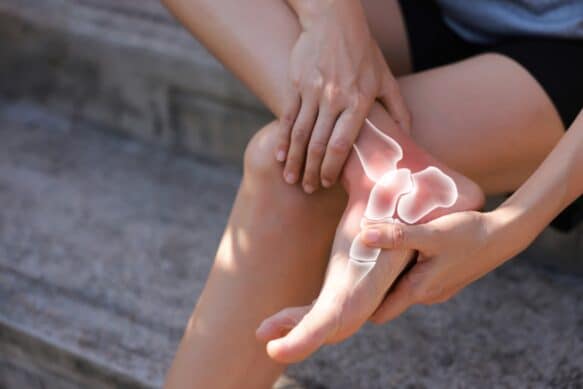
- Fractures, particularly to the legs, arms, and collarbone, are common even in low-speed collisions because riders are directly exposed to impact.
- Traumatic brain injury – among the most serious and frequently fatal injuries in motorcycle collisions; even with a compliant helmet, a serious impact can still cause a concussion or more severe brain injury.
- Spinal cord injury – among the most catastrophic possible outcomes, sometimes resulting in partial or complete paralysis.
- Amputation or crush injuries – from a limb being caught between the motorcycle and another vehicle or the road surface.
- Psychological injury – PTSD and anxiety about riding or driving are common after a serious crash. Canadian law across all provinces recognizes psychological injuries as compensable, whether they accompany a physical injury or stand on their own.
In provinces with catastrophic injury classifications, most notably Ontario, several of these injury types can significantly increase the benefits available under the applicable insurance regime.

How Insurance Works After a Motorcycle Accident – Province by Province
Canada does not have a single national system for motorcycle accident insurance. Each province operates its own framework, and the differences are significant. What compensation is available, how you access it, and whether you can sue the at-fault driver all depend on where your accident happened, not where you live.
| Province | Insurance model | Can you sue the at-fault driver for injuries? |
|---|---|---|
| Ontario | Hybrid: SABS accident benefits plus tort | Yes, if the injury meets the “permanent serious impairment” threshold |
| British Columbia | ICBC Enhanced Care, no-fault (since May 1, 2021) | Generally no, with limited exceptions such as Criminal Code convictions |
| Alberta | Tort, moving to “Care-First” no-fault on January 1, 2027 | Yes, for accidents before 2027 (minor injury cap applies) |
| Quebec | SAAQ pure no-fault | No, for bodily injury |
| Saskatchewan | Choice of tort or no-fault through SGI | Depends on the option chosen when the policy was bought |
| Manitoba | MPI no-fault (PIPP) | Generally no, for bodily injury |
| Atlantic provinces | Tort, private insurers | Typically yes, subject to limitation periods and any caps |
Ontario: SABS and the Tort System
Ontario uses a hybrid system. After a motorcycle accident, two streams of compensation may apply:
- Accident benefits (SABS) – claimed through your own motorcycle insurance policy regardless of who caused the crash. As of July 1, 2026, medical, rehabilitation, and attendant care benefits are included as mandatory minimums on every Ontario motorcycle policy; other benefits, including income replacement, are optional add-ons you must purchase separately. Whether your policy includes these optional coverages depends on what was selected when it was issued.
- You can pursue a tort claim against the at-fault driver if your injury meets Ontario’s legal threshold for “permanent serious impairment,” covering pain and suffering and losses beyond what SABS provides.
- Ontario’s Motor Vehicle Accident Claims Fund is a last resort if the at-fault driver is uninsured or cannot be identified.
Accident benefit disputes go to the Licence Appeal Tribunal, and the Financial Services Regulatory Authority of Ontario (FSRA) regulates insurers. For Ontario-specific help, see our Toronto or Ottawa personal injury lawyers, who handle motorcycle accident claims.
British Columbia: ICBC Enhanced Care (No-Fault)
Since May 1, 2021, British Columbia has operated under a care-based, no-fault insurance model administered by ICBC (Insurance Corporation of British Columbia). Under Enhanced Care:
- Benefits are available regardless of fault; any BC resident injured in a motor vehicle crash, including motorcycle riders, receives care and recovery benefits through ICBC, whether or not they caused the accident.
- Income replacement is provided at 90% of net income, up to a maximum gross annual income. Pre-approved medical treatments, physiotherapy, massage, counselling, and chiropractic are covered from the outset, typically without requiring a lawyer to access them.
- Tort claims are generally not available for bodily injury. BC eliminated the right to sue an at-fault driver for pain and suffering in most motorcycle accident cases. Exceptions may exist where the at-fault driver is convicted of a Criminal Code offense such as impaired driving. A constitutional challenge to the no-fault model is currently before the courts.
Property damage claims (damage to the motorcycle itself) remain tort-based and are handled separately. Disputes over ICBC benefit entitlements are resolved through the Civil Resolution Tribunal. This model is fundamentally different from Ontario’s, and riders who have moved between provinces should not assume the same rules apply.
Alberta: Tort System (Transitioning to No-Fault in 2027)
As of 2026, Alberta still operates under a tort-based system for motorcycle accidents. Injured riders can sue the at-fault driver for pain and suffering, lost income, and future care costs, subject to a minor injury cap (approximately $6,306 for 2026 soft-tissue injuries) that insurers often try to apply.
2027 change: Alberta is scheduled to transition to a “Care-First” no-fault insurance model on January 1, 2027, under Bill 47 (the Automobile Insurance Act). For any motorcycle accident that occurs before that date, the current tort-based rules apply – and the date of the accident, not the date the claim is resolved, determines which system governs. Riders injured in 2026 retain the full right to sue under the existing rules, even if their case continues into 2027 or later.
Alberta’s Section B no-fault accident benefits (medical care, prescriptions, disability) are available regardless of fault through your own insurer, with a general two-year limitation period from the date of the accident. Alberta’s Limitations Act generally provides a two-year deadline for tort claims, though the start date can depend on the circumstances. Some policies set even shorter contractual deadlines.
Quebec: SAAQ No-Fault System
Quebec operates under a pure no-fault system administered by the Société de l’assurance automobile du Québec (SAAQ). Under Quebec’s Automobile Insurance Act:
- All road accident victims receive compensation from the SAAQ regardless of fault. This includes motorcycle riders, passengers, pedestrians, and cyclists. Benefits include medical and rehabilitation expenses, income replacement at up to 90% of net income (subject to an indexed annual cap), and disability compensation for permanent impairments.
- You cannot sue the at-fault driver for bodily injury in Quebec. The no-fault system replaces tort claims entirely for personal injuries arising from motor vehicle accidents. Property damage claims remain separate.
- The SAAQ system has extraterritorial scope. Quebec residents injured in motorcycle accidents outside the province (including elsewhere in Canada) may still be compensated through the SAAQ, and the SAAQ’s no-fault rule applies to non-residents injured in Quebec.
Compensation claims must generally be filed within three years of the accident date. The Tribunal administratif du Québec (TAQ) can review disputes over SAAQ decisions. Riders crossing between Ontario and Quebec, common along the Ottawa-Gatineau corridor, should be aware that the applicable system depends on where the accident occurred, which can dramatically affect both the process and the outcome.
Saskatchewan, Manitoba, and the Atlantic Provinces
Saskatchewan offers riders a choice between a tort-based system and a no-fault system administered by SGI (Saskatchewan Government Insurance). At the time of policy purchase, you choose whether you can sue the at-fault driver or receive benefits through the no-fault plan.
Manitoba operates a no-fault system through MPI (Manitoba Public Insurance) under the Personal Injury Protection Plan (PIPP). As in BC and Quebec, injured motorcycle riders receive benefits from their own insurer regardless of fault, and tort claims for bodily injury are generally unavailable.
The Atlantic provinces (New Brunswick, Nova Scotia, Prince Edward Island, and Newfoundland and Labrador) generally operate under tort-based systems with private insurers. However, specific rules, caps, and limitation periods vary by province. Motorcycle riders in these provinces can typically sue the at-fault driver for damages, subject to provincial limitation periods and any applicable injury thresholds or caps.
Helmet Laws Across Canada
Every Canadian province and territory requires motorcycle operators and passengers to wear helmets that meet prescribed safety standards. Not wearing a compliant helmet, or wearing one that does not meet the applicable standard, does not prevent you from bringing a claim in any province – but it can affect your compensation.
Tort-based provinces (Ontario, Alberta)
In tort-based provinces like Ontario and Alberta, an insurer or defendant can raise what is commonly called the “helmet defence” – an argument that the rider’s failure to wear a compliant helmet amounted to contributory negligence and should reduce compensation proportionally based on how much that failure contributed to the severity of the injuries sustained. The insurer must typically prove this connection with specific evidence; general statistics on helmet effectiveness are usually insufficient on their own.
No-fault provinces (BC, Quebec, Manitoba)
In no-fault provinces like BC, Quebec, and Manitoba, the helmet defence does not arise in the same way because there is no tort claim to reduce. However, helmet non-compliance may still matter for regulatory penalties, insurance coverage disputes, or, in BC, the limited circumstances where a tort claim remains available.
Because helmet law requirements and their legal consequences vary by jurisdiction, this is an issue worth discussing with a motorcycle accident lawyer familiar with the specific rules in the province where your accident occurred.
How Fault Is Determined After a Motorcycle Accident
How fault is assigned after a motorcycle accident depends on the province:
Ontario
Ontario uses standardized Fault Determination Rules (O. Reg. 668) – fixed percentages assigned to defined collision scenarios, the same rules that apply to car accidents. A motorcycle rear-ended at a red light is treated the same as a car would be.
Alberta
Alberta applies common-law negligence principles, assessed based on the specific facts of each collision.
BC, Quebec & Manitoba
These provinces have no-fault systems where fault determination for bodily injury compensation is generally not relevant – benefits are provided regardless of who caused the accident. However, fault may still affect property damage claims and insurance premiums.
Two motorcycle-specific fault issues
- “I didn’t see the motorcycle” – common in left-turn and lane-change collisions, in which a driver claims they did not notice a bike that was legally present.
- Lane position – no Canadian province currently recognizes lane splitting or lane filtering as legal, and a rider weaving between lanes at the time of a collision may be found partially or fully at fault in tort-based provinces or may face regulatory consequences in no-fault provinces.
In provinces that apply contributory negligence rules (Ontario, Alberta, and most Atlantic provinces), partial fault reduces compensation proportionally rather than eliminating the claim.
Catastrophic Motorcycle Injuries and Higher Claim Values
In Ontario, “catastrophic impairment” is a specific legal classification under SABS, not just a description of a severe injury. Qualifying requires meeting one of several defined criteria (paraplegia, quadriplegia, qualifying traumatic brain injury, amputation, total vision loss, a combined impairment rating of 55% or higher, or a marked mental/behavioural disorder). Clearing that threshold raises the combined benefit ceiling for medical, rehabilitation, and attendant care from $65,000, the standard non-catastrophic limit, to up to $1,000,000, the standard catastrophic limit.
BC’s Enhanced Care system does not use Ontario’s catastrophic impairment classification. Instead, ICBC provides enhanced benefits for “serious or life-altering injuries” under a separate structure, including permanent impairment benefits and expanded rehabilitation. Alberta’s current tort system does not cap catastrophic injury damages as Ontario’s SABS does; courts assess damages on a case-by-case basis.
Quebec’s SAAQ provides permanent impairment benefits based on a percentage-of-disability scale, indexed annually, with separate provisions for catastrophic outcomes like total disability.
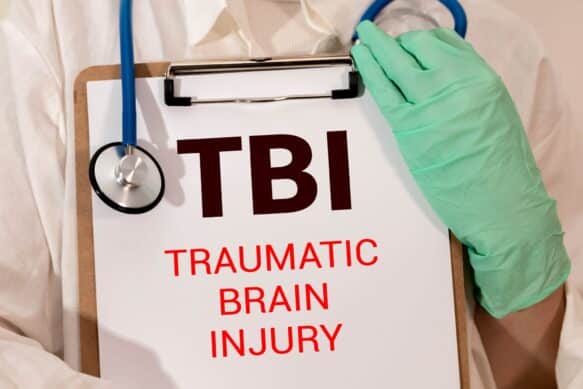
Why this matters for riders: Motorcycle collisions produce catastrophic-level injuries more frequently than car accidents, simply because traumatic brain injury and spinal cord injury – two of the qualifying categories – are exactly the kind of harm a rider without any surrounding vehicle structure is more likely to sustain.
What to Do After a Motorcycle Accident in Canada
The steps you take in the hours and days after a motorcycle accident can affect your health, your insurance claim, and your ability to pursue compensation, regardless of which province you are in:
- Get medical attention – even if you feel fine at the scene, adrenaline can mask symptoms, and some injuries like concussions or internal trauma may not be immediately apparent. A medical record created close to the date of the accident is also important evidence in any claim.
- Report the accident – reporting requirements vary by province. In Ontario, police attendance is generally required when someone is injured or when there is significant property damage. In BC, report to ICBC. In Quebec, report to police and the SAAQ. When in doubt, report. Failing to do so can complicate your claim.
- Exchange information – get the other driver’s name, license plate number, insurance details, and contact details. Collect witness names and phone numbers while they are still at the scene.
- Photograph the scene and your injuries – document the road, skid marks, vehicle positions, damage to your bike, and any visible injuries. Photos taken immediately are difficult to replicate later.
- Preserve your helmet, gear, and any video evidence – do not discard, clean, or repair your helmet or riding gear, even if damaged. These are physical evidence of impact severity. If you have a dash-cam, action camera, or GPS log, preserve that footage immediately.
- Notify your insurer promptly. Each province has its own notification deadlines. In Ontario, you generally must notify your insurer within seven days. In BC, report to ICBC as soon as possible. Notifying your insurer does not require you to give a detailed recorded statement right away.
- Get legal advice – consulting a motorcycle accident lawyer early helps you understand which provincial system applies, what deadlines govern your claim, what evidence to preserve, and whether a recorded statement to an adjuster is in your best interest. Most motorcycle accident lawyers in Canada offer a free initial consultation.
Evidence That Strengthens a Motorcycle Accident Claim
Motorcycle claims often turn on evidence that a typical car accident claim does not rely on as heavily:
- Photos of bike damage, the specific pattern and location of the damage, can help reconstruct exactly how the collision happened.
- Gear condition, a damaged helmet, jacket, or riding gear, is evidence of impact severity and, in tort-based provinces, can also help counter a helmet defence by showing that the gear worn met safety standards.
- Witness statements, gathered as early as possible, since motorcycles are more likely to face the “didn’t see them” defence than cars.
- Telemetry and camera footage, where available, action cameras, GPS tracking, and motorcycle dash-cams, can provide objective evidence of speed, position, and the sequence of events.
- Medical records from the day of the accident, an ER visit or a same-day doctor’s appointment, create a contemporaneous medical record that links your injuries to the crash, which can be important in any provincial system.
Preserving this evidence quickly matters more in motorcycle claims than in many other injury types, since bikes are sometimes repaired or written off before a lawyer can independently inspect the damage.
How Much Does a Motorcycle Accident Lawyer Cost?
Tort-based provinces
In tort-based provinces (Ontario, Alberta, and the Atlantic provinces), most motorcycle accident lawyers work on a contingency fee basis. This means no upfront cost, with the fee calculated as a percentage of what is recovered, agreed to in writing before they take your case. If the claim is unsuccessful, you generally do not owe a legal fee. Disbursements, such as medical-legal reports or accident reconstruction fees, are sometimes billed separately – ask about this during your initial consultation.
No-fault provinces
In no-fault provinces such as BC, Quebec, and Manitoba, a lawyer’s role differs. They may help you navigate benefit disputes, appeal denials, or pursue the limited tort claims that remain available. Fee structures vary accordingly. In BC, where tort claims for bodily injury are largely unavailable, fewer lawyers handle these cases on contingency.
Free initial consultations are standard across Canada for motorcycle accident claims. You can browse Top Lawyers Canada’s directory to find and compare motorcycle accident lawyers in your city.
Limitation Periods Across Canada
Every Canadian province imposes deadlines for filing motorcycle accident claims. Missing the deadline can permanently end your right to compensation, no matter how strong your case is. These deadlines vary by province and by the type of claim:
| Province | Deadline | Notes |
|---|---|---|
| Ontario | 2 years for a tort claim (Limitations Act) | When the period begins can depend on when you discovered the injury. Accident benefits: generally 7 days to notify your insurer and 30 days to submit the OCF-1. Exceptions may apply for minors. |
| Alberta | 2 years for tort claims; 10-year ultimate limitation period | The start date may depend on when you knew, or ought to have known, that the other party caused the injury. Some policies set shorter contractual deadlines. |
| British Columbia | ICBC notice and application timelines | For the limited tort claims that remain available (scenarios involving criminal convictions), the general limitation period applies. |
| Quebec | 3 years from the accident date | For SAAQ compensation claims. |
| Saskatchewan, Manitoba & Atlantic provinces | Generally 2 to 3 years, depending on the province | Variations for minors and special circumstances. |
Deadline warning: Because limitation periods are strict and their start dates can depend on the specific facts of your case, consulting a motorcycle accident lawyer in your province as soon as possible after an accident is strongly recommended, even before you have decided whether to pursue a formal claim.
If Your Injury Keeps You Off Work
The income-loss component of a motorcycle accident claim varies by province. In Ontario, income replacement through SABS is optional as of July 2026, and the income component of a tort claim is generally a one-time settlement payment. In BC, ICBC’s Enhanced Care provides income replacement at 90% of net income. In Quebec, the SAAQ provides income replacement benefits directly.
Separately, if you have long-term disability (LTD) insurance through an employer plan or a private policy, you can file a separate claim with your disability insurer for ongoing monthly income. In contrast, your motorcycle accident claim is still being resolved. If an LTD claim connected to your accident has been denied, delayed, or cut off, our guide to long-term disability claims covers that separate process in more depth.
Key Motorcycle Accident Terms to Know
- SABS, Ontario’s Statutory Accident Benefits Schedule, provides no-fault benefits from your own insurer after a motorcycle accident, regardless of fault.
- ICBC Enhanced Care, British Columbia’s care-based, no-fault insurance model that covers all crash victims regardless of fault.
- SAAQ (Société de l’assurance automobile du Québec), the public insurer providing no-fault compensation for all road accident victims.
- Tort claim – a lawsuit against the at-fault driver, available in tort-based provinces (Ontario, Alberta, most Atlantic provinces) for damages like pain and suffering.
- Helmet defence – an insurer’s argument in tort-based provinces that a rider’s failure to wear a compliant helmet contributed to the severity of their injuries, requiring specific causal evidence to succeed.
- Catastrophic impairment, in Ontario, is a specific SABS classification that significantly raises available benefit limits for the most severe injuries.
- Fault Determination Rules – Ontario’s standardized system for assigning insurance fault, independent of any police charges.
- Contributory negligence – the principle in tort-based provinces that shared fault reduces, rather than eliminates, compensation.
- Contingency fee – a fee arrangement in which the lawyer is paid a percentage of the amount recovered, with no upfront cost to the client.
- Minor Injury Regulation (MIR), in Alberta, caps pain and suffering damages for soft-tissue injuries classified as “minor.”
How to Choose the Right Motorcycle Accident Lawyer
Motorcycle claims benefit from a lawyer who understands the assumptions riders face and can counter a helmet defence or a “didn’t see them” fault argument with the right evidence. Because motorcycle accident law varies so significantly across provinces, the most important factor is finding a lawyer licensed and experienced in the province where your accident occurred.
When evaluating a motorcycle accident lawyer, ask about their experience with motorcycle collision cases (not just general personal injury), how they have handled fault disputes or helmet-defence arguments in the past, and how their fee structure works. In no-fault provinces like BC, fewer lawyers handle motor vehicle claims, but those who do tend to specialize in benefit disputes and ICBC appeals.
You can browse Top Lawyers Canada’s directory to find verified motorcycle accident lawyers across the country, including in Toronto, Ottawa, Markham, and other cities.
The information on this page is general and is not a substitute for legal advice. Every motorcycle accident claim depends on its own facts and the laws of the province where it occurred.
Frequently Asked Questions
Are motorcycle accident claims different from car accident claims in Canada?
Yes, in three practical ways that apply across all provinces: injury severity tends to be higher given the lack of any protective structure around the rider, assumptions about rider behaviour can affect how quickly an insurer engages in a fair settlement, and insurers in tort-based provinces dispute comparative fault more often than they would in an equivalent car-versus-car collision. The specific legal framework governing your claim – SABS in Ontario, ICBC Enhanced Care in BC, SAAQ in Quebec, or the tort system in Alberta – depends on where the accident occurred.
Does helmet law differ across Canadian provinces?
Every Canadian province requires motorcycle riders and passengers to wear a compliant helmet. The requirement is universal, but the legal consequences of non-compliance vary. In tort-based provinces like Ontario and Alberta, not wearing a helmet can be raised as a contributory negligence argument to reduce your compensation. However, the insurer must prove a specific causal link between the helmet failure and the severity of your injuries. In no-fault provinces like BC, Quebec, and Manitoba, the helmet defence doesn’t apply in the same way because there is typically no tort claim to reduce. However, non-compliance may still carry regulatory consequences.
Can I sue the at-fault driver after a motorcycle accident in Canada?
It depends on your province. In Ontario and Alberta (until 2027), you generally can; Ontario requires your injury to meet a “permanent serious impairment” threshold first, while Alberta allows tort claims for soft-tissue injuries, subject to a minor injury cap. In BC (since 2021), Quebec, and Manitoba, tort claims for bodily injury are generally unavailable; compensation comes through the public insurer (ICBC, SAAQ, or MPI) regardless of fault. Saskatchewan offers a choice between tort and no-fault at the time of policy purchase.
What is the limitation period for a motorcycle accident claim in Canada?
Limitation periods vary by province: generally two years in Ontario and Alberta for tort claims, three years for SAAQ claims in Quebec, and specific benefit application timelines in no-fault provinces. The start date can depend on when you discovered the injury, not necessarily the accident date, and exceptions may apply for minors and other special circumstances. Because these deadlines are strict and missing them can permanently end your right to compensation, consulting a motorcycle accident lawyer promptly is strongly recommended.
How does Ontario’s 2026 SABS change affect motorcycle accident claims?
As of July 1, 2026, Ontario’s SABS framework distinguishes between mandatory and optional benefits on motorcycle policies. Medical, rehabilitation, and attendant care benefits remain mandatory minimums on every policy. However, other benefits, including income replacement, are now optional add-ons that you must purchase separately. Whether your policy includes these optional coverages depends on what was selected when the policy was issued. Confirming your policy specifics matters, as two riders from the same insurer may offer very different coverage.
What is ICBC Enhanced Care and how does it affect motorcycle riders in BC?
ICBC Enhanced Care is British Columbia’s care-based, no-fault insurance model, in effect since May 2021. Under this system, any BC resident injured in a motorcycle accident receives care and recovery benefits from ICBC, regardless of who caused the crash. Benefits include pre-approved medical treatments, income replacement at 90% of net income (subject to caps), and rehabilitation. In exchange, the right to sue the at-fault driver for pain and suffering has been largely eliminated. A constitutional challenge to the model is currently before the courts.
How does Quebec’s SAAQ system work for motorcycle accidents?
Quebec’s SAAQ operates a pure no-fault system for all road accidents, including motorcycle collisions. All victims receive compensation directly from the SAAQ regardless of fault, including medical expenses, income replacement at up to 90% of net income, and permanent impairment benefits. In Quebec, you cannot sue the at-fault driver for bodily injury. The SAAQ system has extraterritorial scope, meaning Quebec residents injured outside the province may still access SAAQ compensation. Claims must generally be filed within three years.
Is Alberta switching to no-fault insurance for motorcycle accidents?
Yes – Alberta is scheduled to transition from its current tort-based system to a “Care-First” no-fault model under Bill 47 (the Automobile Insurance Act), effective January 1, 2027. For any motorcycle accident occurring before that date, the current tort rules apply. The date of the accident – not the date the claim is resolved – determines which system governs. Riders injured in 2026 retain the full right to sue the at-fault driver for pain and suffering, lost income, and future care costs under the existing rules.
What happens if my motorcycle accident occurred near a provincial border – which laws apply?
The laws of the province where the accident physically occurred generally govern the claim, not the province where you live. This is especially relevant along the Ottawa-Gatineau corridor (Ontario vs. Quebec), the BC-Alberta border, and other interprovincial boundaries. Quebec’s SAAQ no-fault system governs an accident in Gatineau. In contrast, an accident a few kilometres away in Ottawa is governed by Ontario’s SABS and tort framework, with dramatically different implications for available compensation and how to access it. A motorcycle accident lawyer familiar with both systems can advise on which regime applies.
Does lane-splitting or speeding affect my ability to claim in Canada?
No Canadian province currently recognizes lane splitting or lane filtering as legal. In tort-based provinces, a rider who was weaving between lanes at the time of a collision may be found partially or fully at fault, which can reduce or eliminate compensation depending on the circumstances. Speeding works similarly: it does not automatically bar a claim, but an insurer or court may consider it in a fault dispute. In no-fault provinces, lane splitting may carry regulatory consequences but does not typically affect benefit entitlements, since benefits are provided regardless of fault.
How much does a motorcycle accident lawyer cost in Canada?
In tort-based provinces, most motorcycle accident lawyers work on a contingency-fee basis, with no upfront cost; the fee is calculated as a percentage of what is recovered and confirmed in writing before they take your case. If the claim is unsuccessful, you generally do not owe a legal fee. In no-fault provinces, fee structures vary depending on the type of work (benefit disputes, ICBC appeals, SAAQ reviews). Free initial consultations are standard across the country.
Can I claim for psychological injuries after a motorcycle accident?
Yes. Canadian law across all provinces recognizes psychological injuries, including PTSD, anxiety, depression, and fear of riding or driving, as compensable, whether they accompany a physical injury or arise largely on their own. In tort-based provinces, these claims fall under pain-and-suffering damages. In no-fault provinces, the public insurer typically covers psychological treatment under its care and recovery benefits.
What if the at-fault driver claims they didn’t see my motorcycle?
This is one of the most common defences in motorcycle claims across Canada, but it does not automatically absolve a driver of fault. In Ontario, the Fault Determination Rules still apply based on how the vehicles were actually positioned. In Alberta, common-law negligence principles assess what a reasonable driver should have seen. A motorcycle accident lawyer can help gather evidence, witness statements, dash-cam footage, intersection cameras, and accident reconstruction where needed, to counter this defence when it does not reflect what actually happened.
Should I give a recorded statement to the insurance adjuster after a motorcycle accident?
Be cautious. You are generally expected to cooperate with your own insurer to receive benefits (accident benefits in Ontario, Enhanced Care in BC, SAAQ in Quebec). Still, you are not obligated to give a detailed recorded statement to another driver’s insurer. Speaking too soon after a crash, when shock or adrenaline can affect how you describe what happened, can create problems for your claim. A motorcycle accident lawyer can advise on what to say, and when, before you speak with any adjuster.
How do I find a motorcycle accident lawyer in my province?
Search Top Lawyers Canada’s directory by city and practice area to find verified motorcycle accident lawyers across the country. Every lawyer listed meets strict eligibility criteria: 10+ years of experience, firm partner status, or Law Society specialist certification. Browse our directory, review profiles, and contact lawyers directly for a free consultation to discuss your accident details and which provincial laws apply.